For the last 6-7 years I’ve been using bottlebrush stage longleaf pines in my matrix plantings. Perhaps it’s an idea we can all consider. Perhaps it’ll catch on. Why? Because it’s awesome. It’s positively Seussian. For many of us gardening is play and who doesn’t want a Sci-Fi vibe in their garden? Typically longleaf pine (Pinus palustris) is used in habitat restoration as it was once an incredibly dominant species in the Southeast. Prior to European arrival longleaf ecosystems covered almost 100 million acres of open woodland like savannas and sandhills.
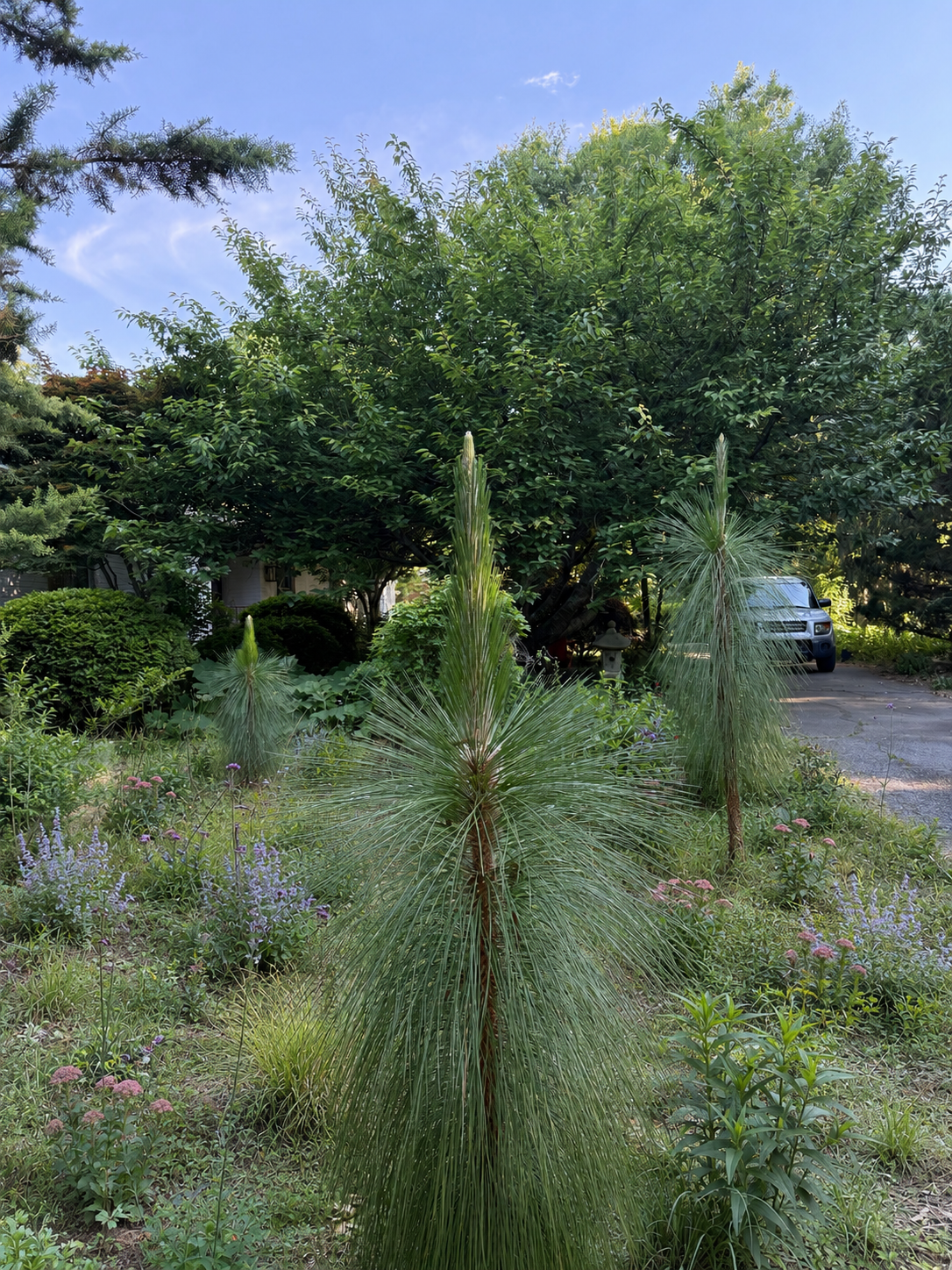
And I get to say this every single time someone asks ‘what the heck ARE those?’ Join me in sharing the gospel. I’ve always been envious anytime I see the highly structural plants in Mediterranean or Australian gardens. I used to take my field botany students to the sandhills all the time and on one trip looking out across a recently burned area where there were many individuals in various growth stages I thought ‘hold on wait a minute.’ I immediately ordered a few dozen and planted them in my front garden. It took a few years to leave what we call the grass stage and begin to shoot up but since then I’ve been doing sort of the reverse of what Japanese gardeners do to train giant black pines like bonzai (a term called Niwaki). I cut the new growth by removing side shoots and trimming back the top candle to limit their vertical growth as well. Even in garden type settings like college campuses they’re used a focal trees and given the space to grow full size.
‘Isn’t that a lot of maintenance?’ You ask. Sure. Like trimming a hedge I suppose. I’ve used them on a number of plantings so far as both a conversation starter and design signature. I’ll let you know how long I can keep them here. I’m guessing after a decade they’ll need to be cut back and new seedlings planting. The stages of this pine are a unique adaptation that allows it to establish roots and resprout after fire.
In a way, periodically starting over is part of the story. Longleaf ecosystems were never frozen landscapes — they were dynamic, fire-shaped worlds filled with ancient giants and the next generation of bizarre little bottlebrushes waiting beneath them.
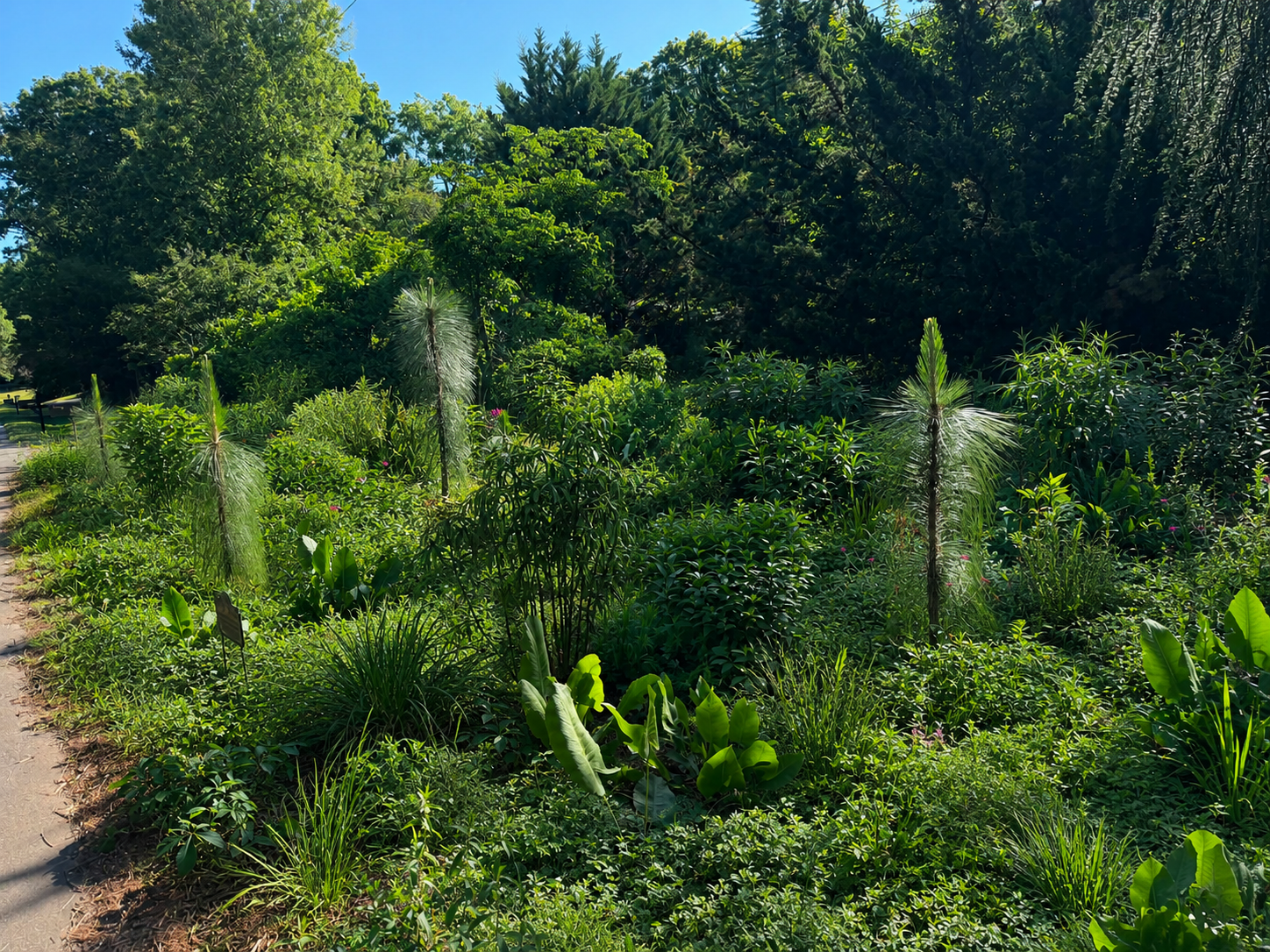
Longleaf needles catching the morning sun in the front garden.