I am troubled by the unsustainability of most of our gardens. For most of us, our creations would not carry on for long without our input. Our gardens would quickly be swallowed by nearby invasives. Even much of the public domain would be dry and barren without its automatic irrigation or spraying regimes. Time is our greatest challenge. Some see only the here and now. Vegetable gardeners think in terms of a single season. To the average gardener the concept of years can seem daunting but us New Naturalists often consider 4 or 5. The orchardist however thinks in decades and the forester in centuries.
The best designers consider deep time. I’ve heard brilliant landscape designers like Thomas Woltz and Aniket Bhagwat often talk in terms of generations. In one of the most ambitious attempts Dan Pearson’s Studio has even considered the 1000 year garden with the development of the Tokachi Millennium Forest. And yet in each of these cases human stewardship in the form of maintenance and at least guidance is still necessary. Even guerilla gardeners must regularly go to war.
Lately I’ve been considering how we might hope to preserve biodiversity not by planting in and around human development, but on and into it. By using cityscapes as substrate itself and the processes of human development to exploit the natural adaptations of evolution. We often see, and now some of us even culturally celebrate, the persistence of weeds in what can be considered industrial barren wastelands. But ironically there are plenty of native plants that have evolved to persist in what ecologists literally call barrens. We can use the adaptations of these plants to preserve biodiversity in our urbanized landscapes in deep time.
Enter crevice gardening and barren adapted species. One of the newer movements in our field is growing plants adapted to cracks and crevices in what naturally are rare habitats. Plenty of botanic gardens have now built and installed a variety of these to feature a wide range of species. There are many urban analogs to the habitats these plants evolved to inhabit. Vacant lots, rail corridors, and demolition fields may represent a new class of post-industrial barrens with their harsh, disturbed mineral landscapes and surprising ecological potential. Sidewalk cracks and abandoned pavement seams can function like granite outcroppings. Rubble fields can function like the thin alkaline soils of cedar glades. Crushed piles of pavement behave like slopes of scree or talus. In fact, trains are the modern equivalent of our extinct megafauna. They transport seeds and cause constant disturbance. They create corridors for plants that proliferate not in the absence of stress and degradation, but because of it. In one of the most hopeful of coincidences we have plants that have evolved to thrive in the wake of our destruction.
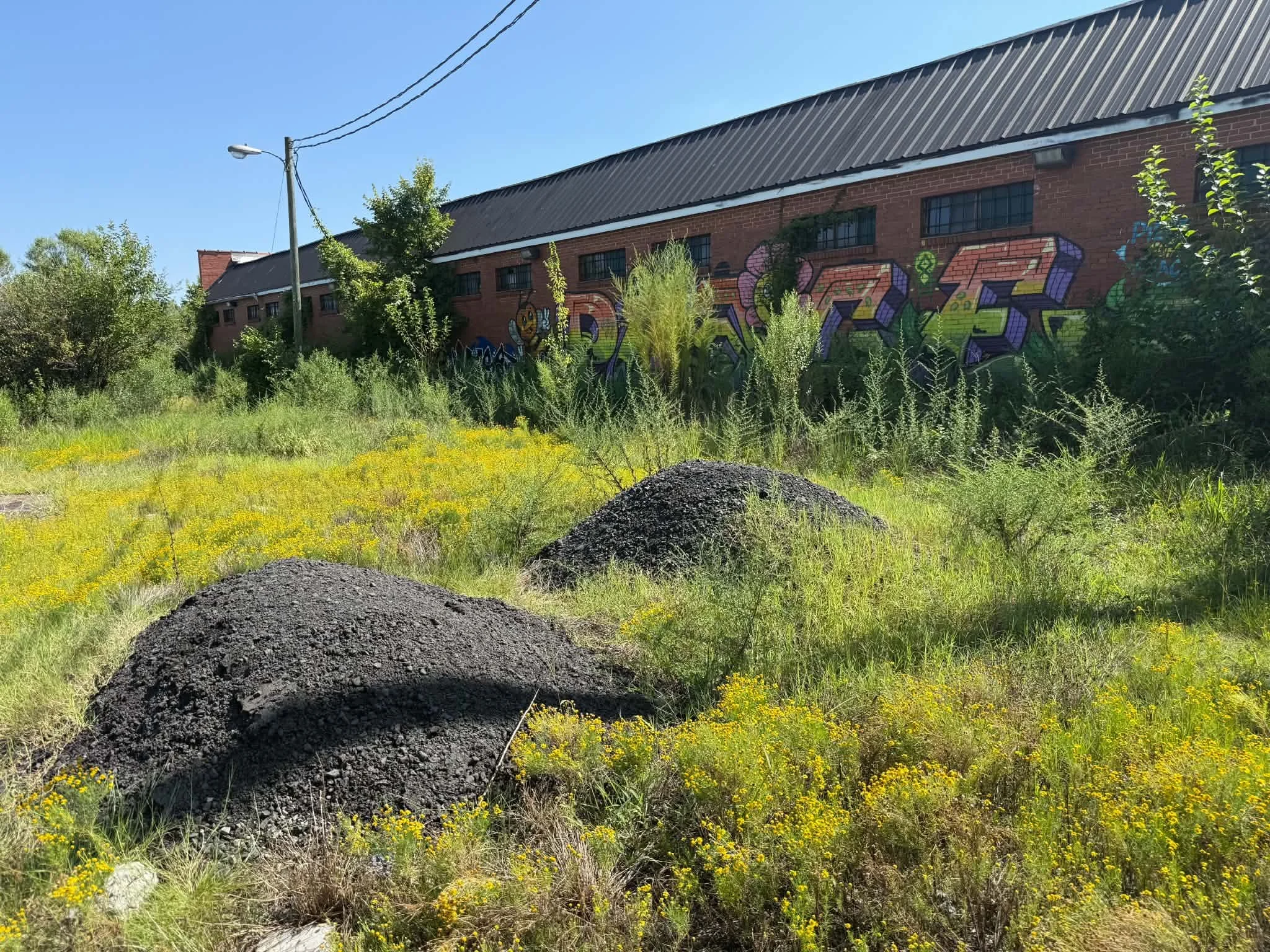
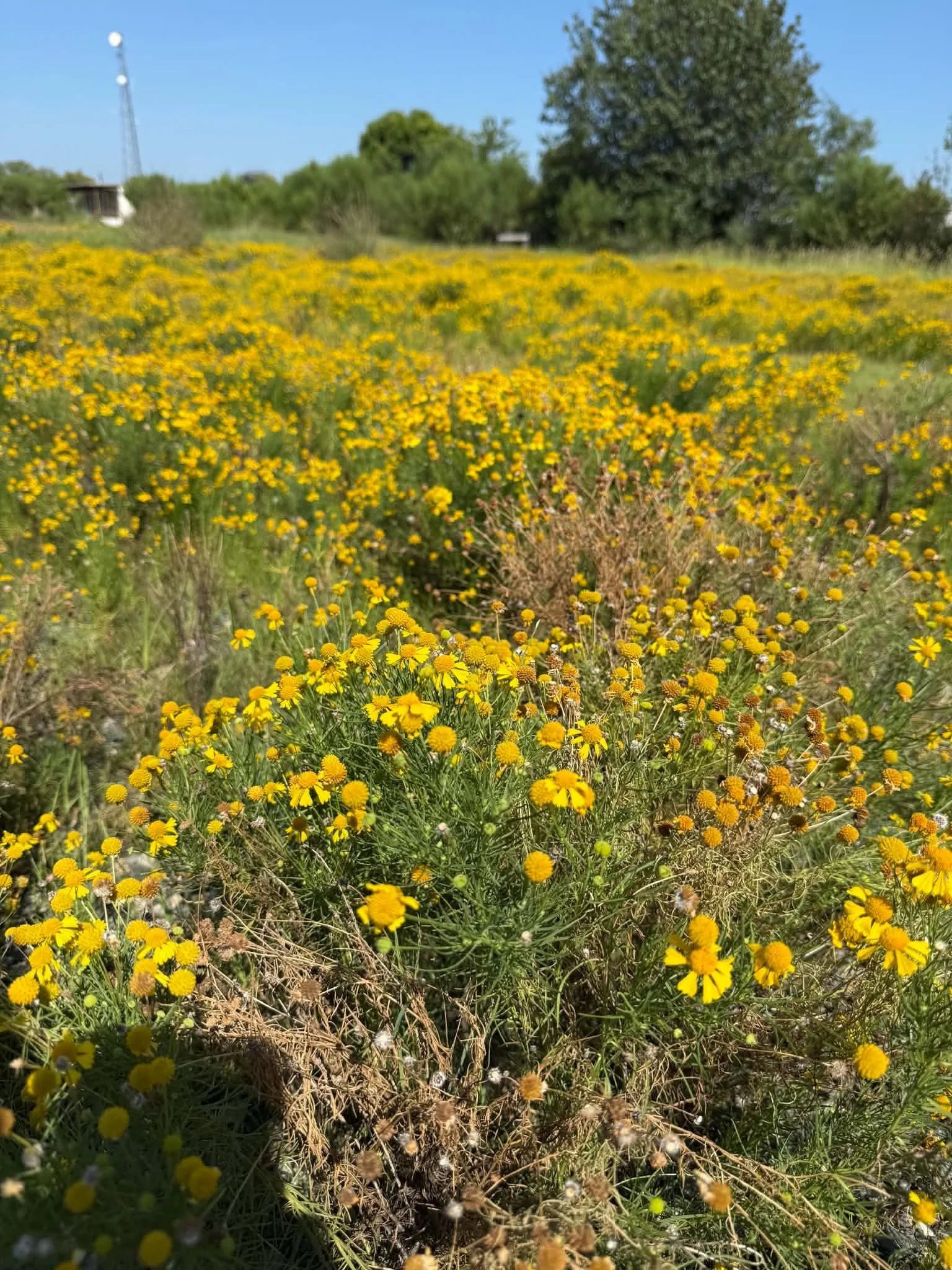
Helenium amarum or yellow dicks in a sort of industrial super bloom in what I’m calling an urban barren. This is an annual prairie species from the southwest.
Mother nature is already guiding us. I’ve also started experimenting with various ones myself. This season I planted out seedlings of Stone Mountain Daisy or Helianthus porterii (a plant shared with me from my late great mentor, the botanist Dr. Larry Barden). It didn’t make it all the way to bloom but typically this plant prefers granite outcroppings. It’s a prolific self seeder so this fall I’ll be throwing out some seed sowing it like nature does, rather than a gardener.
Here’s another one I didn’t plant though - Oenothera speciosa or Pinkladies thriving an the cracks and crevices of an old parking lot. Like yellow dicks, it’s also native to the prairies of the southwest, happy here in it’s urban equivalent. An inspiration and perhaps lesson in how mother nature gardens during the age of disturbance:

Next year I’ll be trialing Phemeranthus or fame flower and leafy prairie clover as well as Tennesee Coneflower. There many of what we call edaphic specialists that may thrive in their urban analogs. Species that like the chemistry of contamination or even the violence of runoff. If we plant the right seeds in the right places the plants that once represented the rarest habitats may become righteous representatives of life in our post-industrial barrens. Perhaps the future refuges of our rarest native plants will not be untouched wilderness, but the fractured surfaces of the cities we leave behind.
.