The STEM Effect- how stem pigments quietly shape garden color.
Whether it the pompoms of historic topiary or the layered drifts of a matrix planting, structure has always been at the forefront of what constitutes a good garden. Color has always served a secondary role with the muted palette as the hallmark of deliberate restraint. While color often refers to the blooms of selected perennials or even the coppery tones of their dead seedheads it rarely focuses on STEMS. And and don’t know about you dear reader, but I am obsessed with STEMS. One stem, two stem, green stem, blue stem. STEMS.
I select and often pair stems that match or echo tones nearby in completely different species or even contrast deliberately. Let’s take a closer look at a few of my favorite combinations:
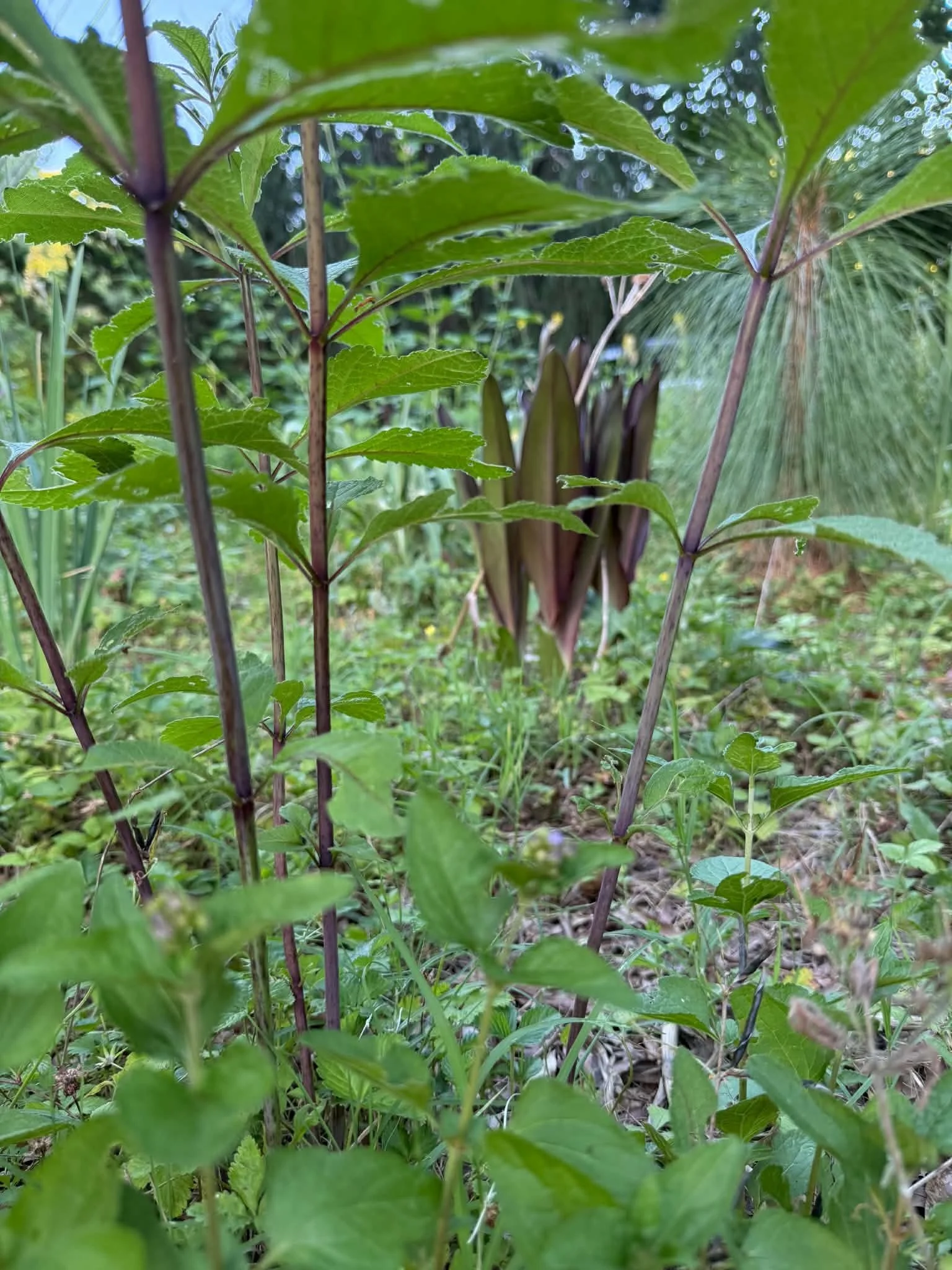
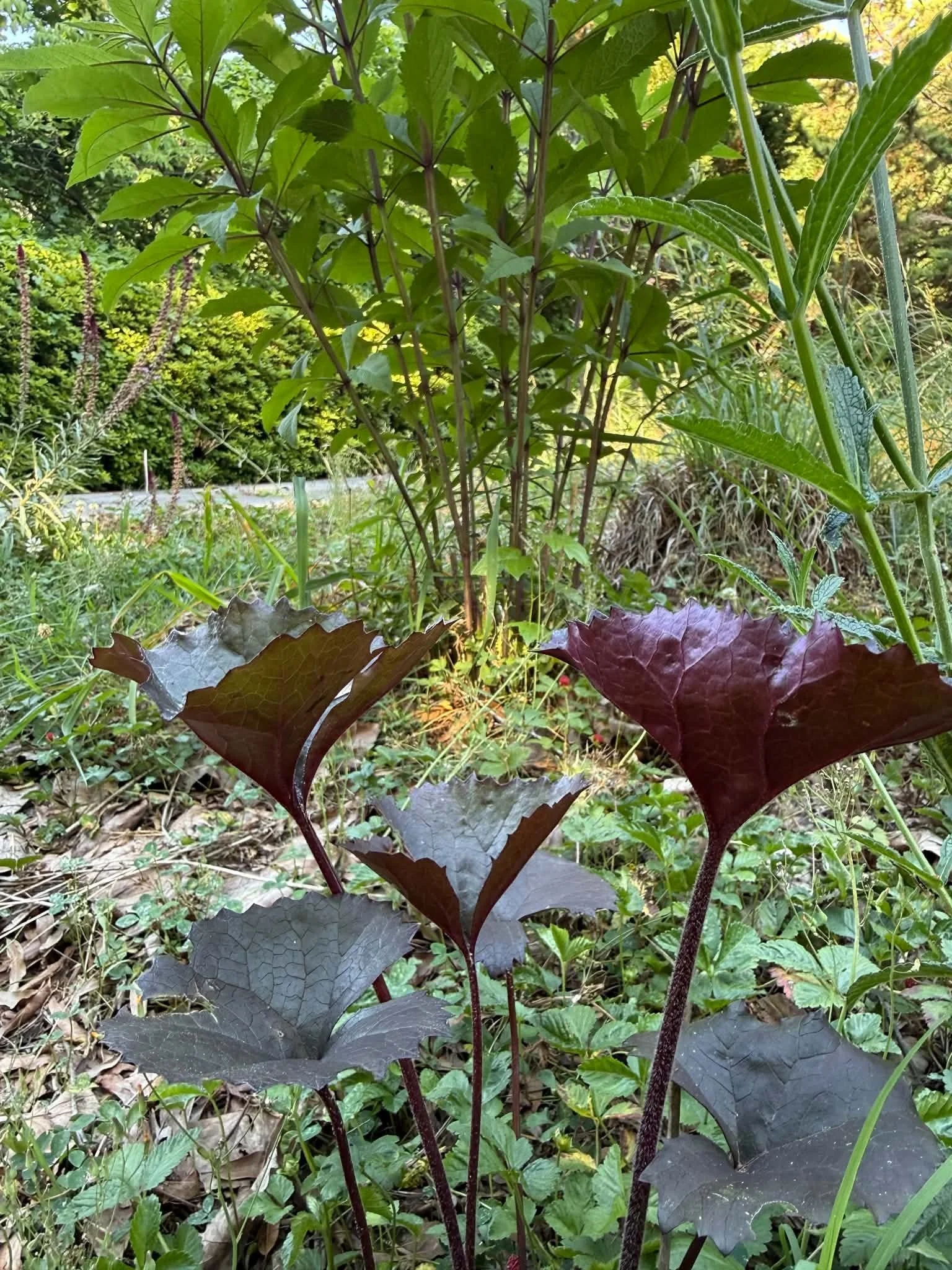
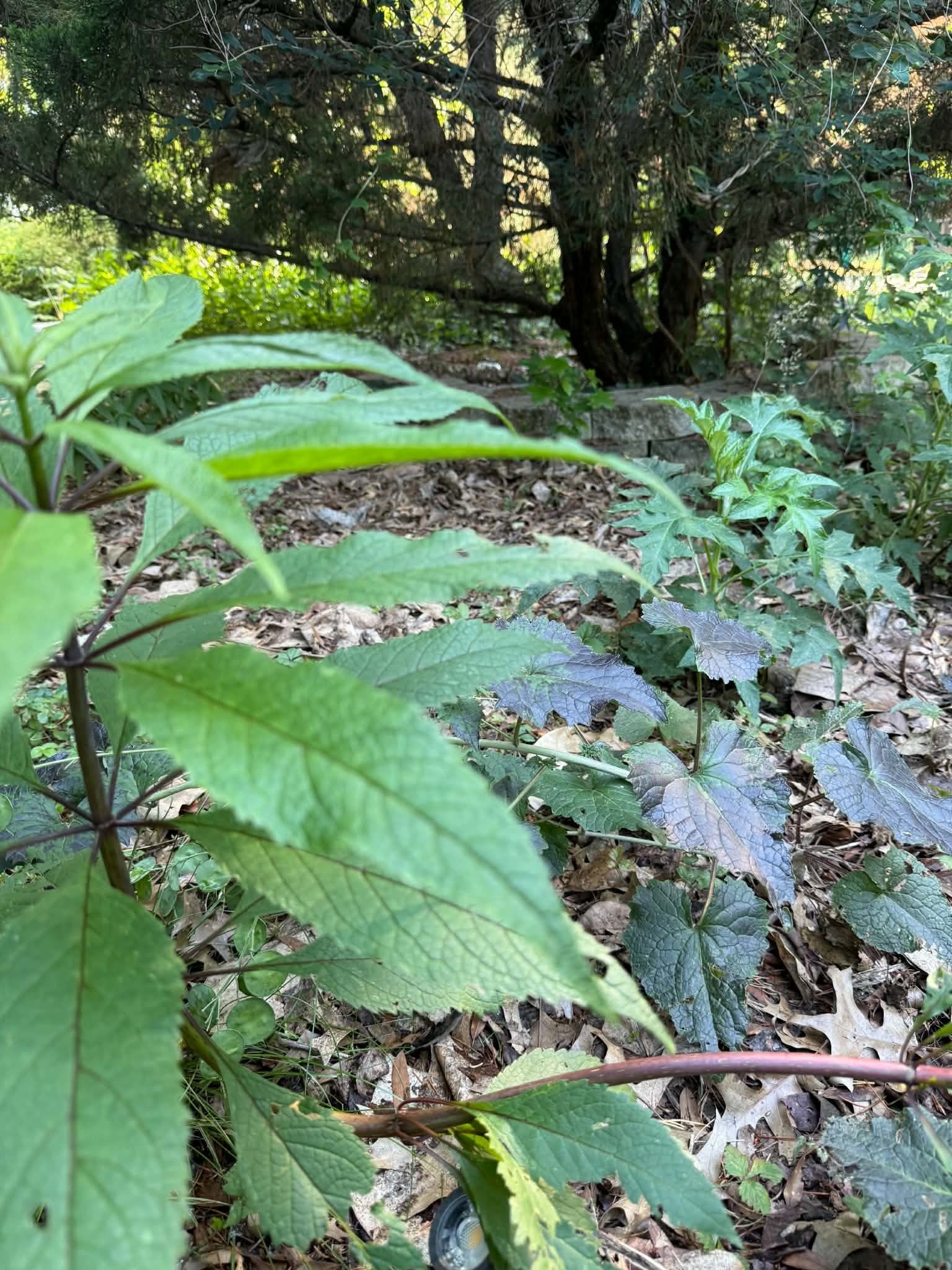
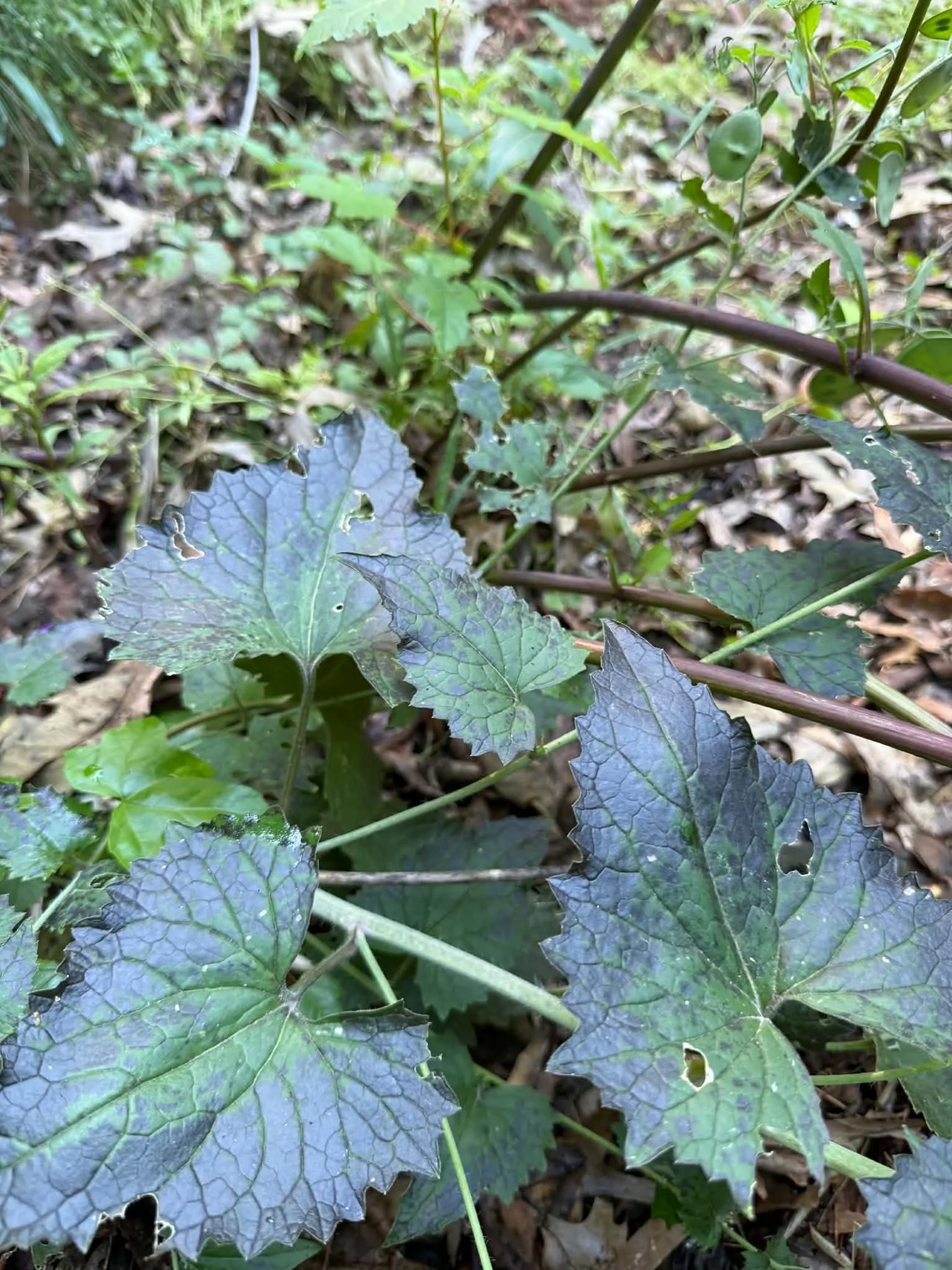
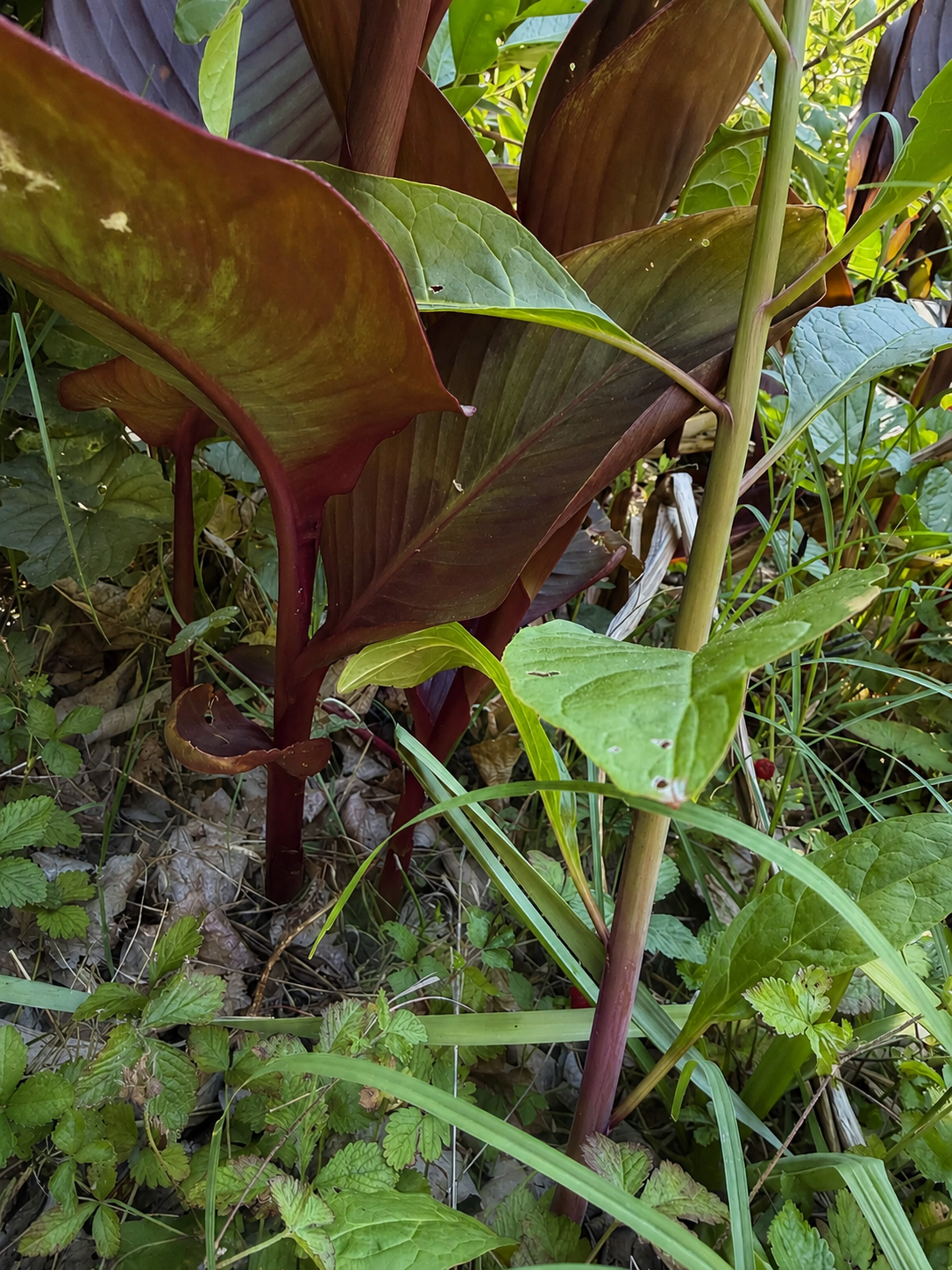
Check out this happy accident. The purple-green stem of pokeweed against the Canna. Pokeweed is obnoxious in my personal garden but I’ll never forget seeing it as a focal plant in a tropical garden on Gardener’s World, proving that a weed is just a plant in the wrong place. I let this one live because it’s too perfect.
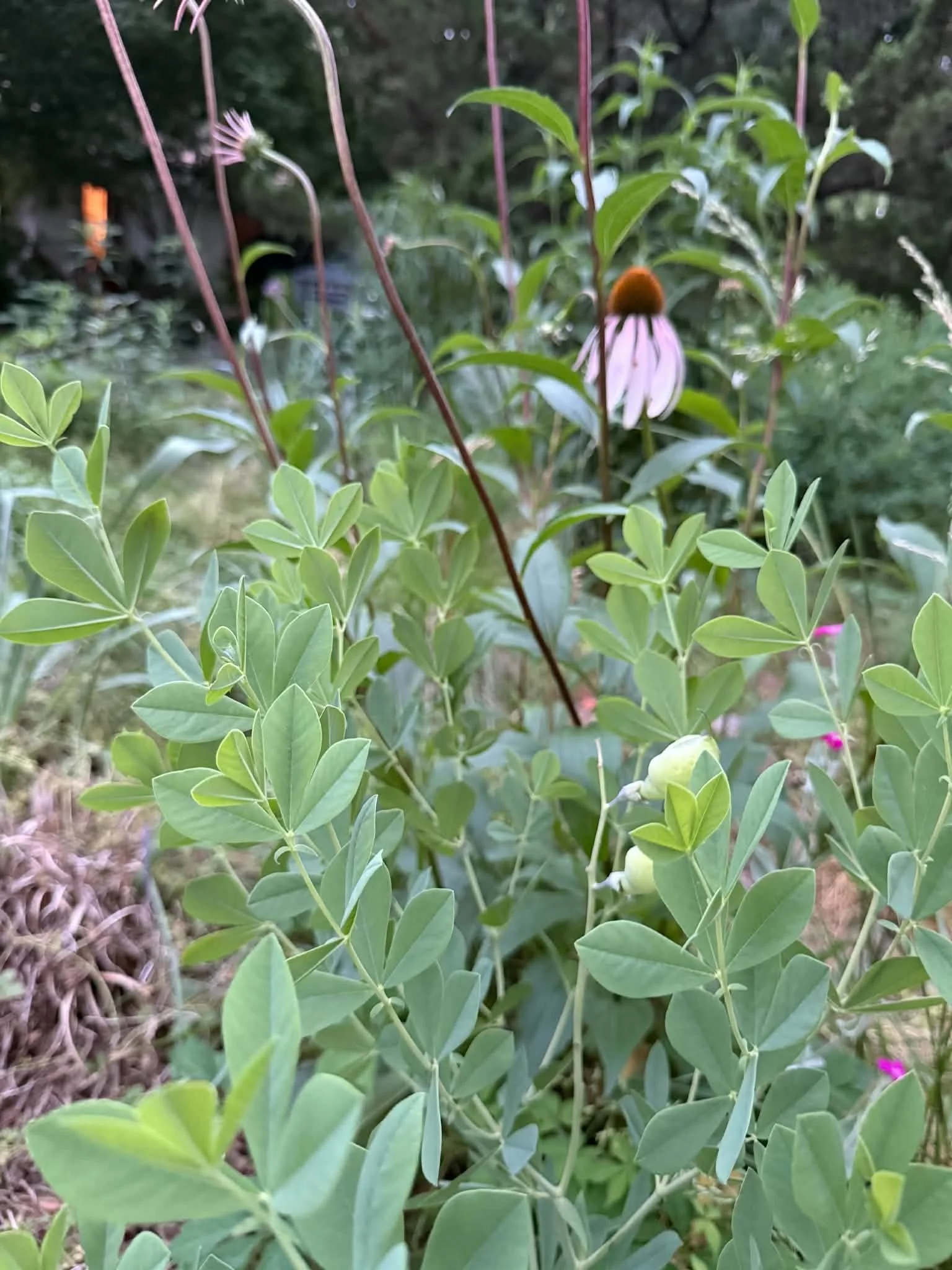
I also love the contrast of purple with the blue-green of glaucous foliage, a rare find outside Mediterranean and desert plants. Here we have the smooth stems of the threatened Echinacea laevigata alongside Baptisia.
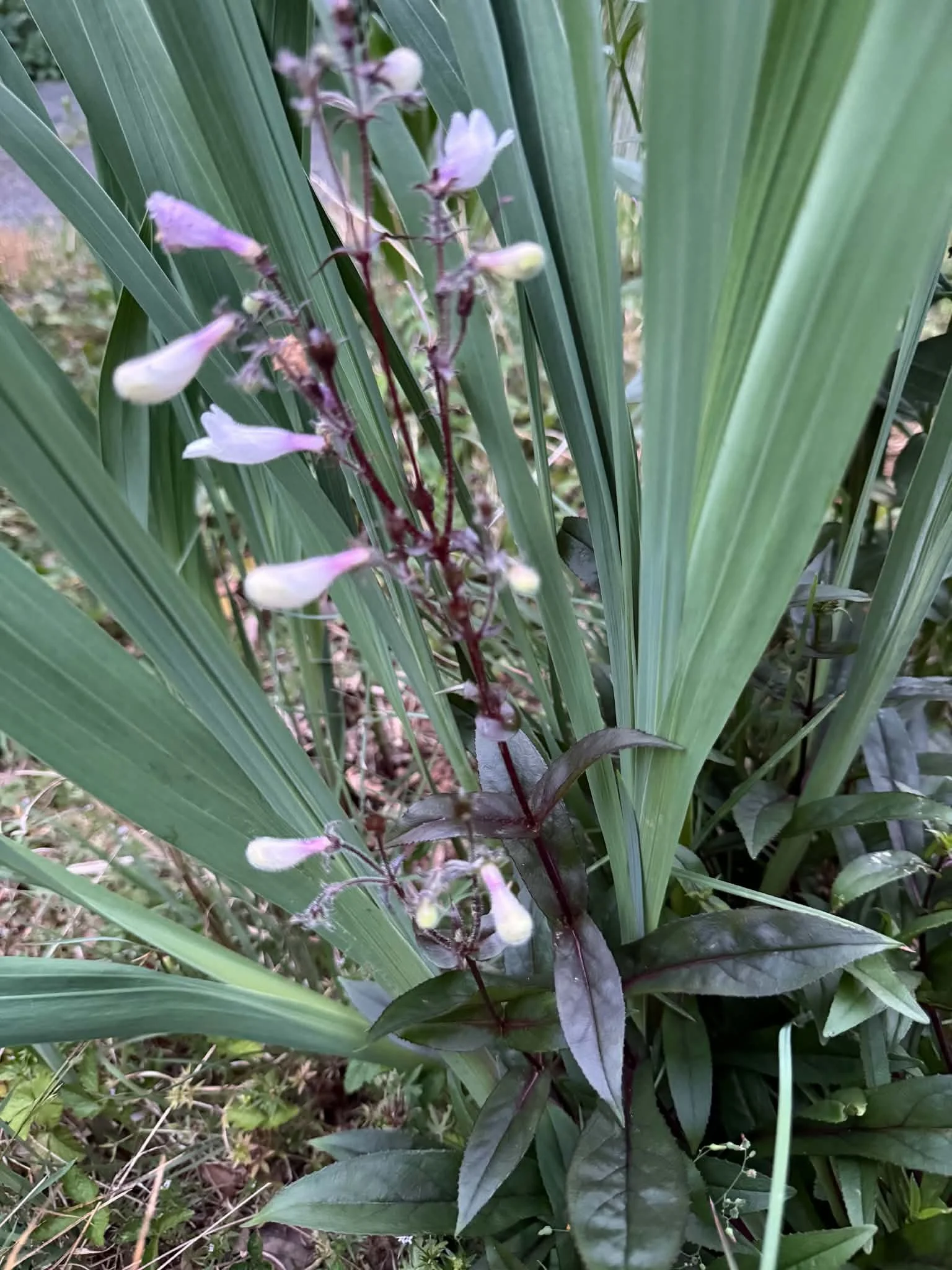
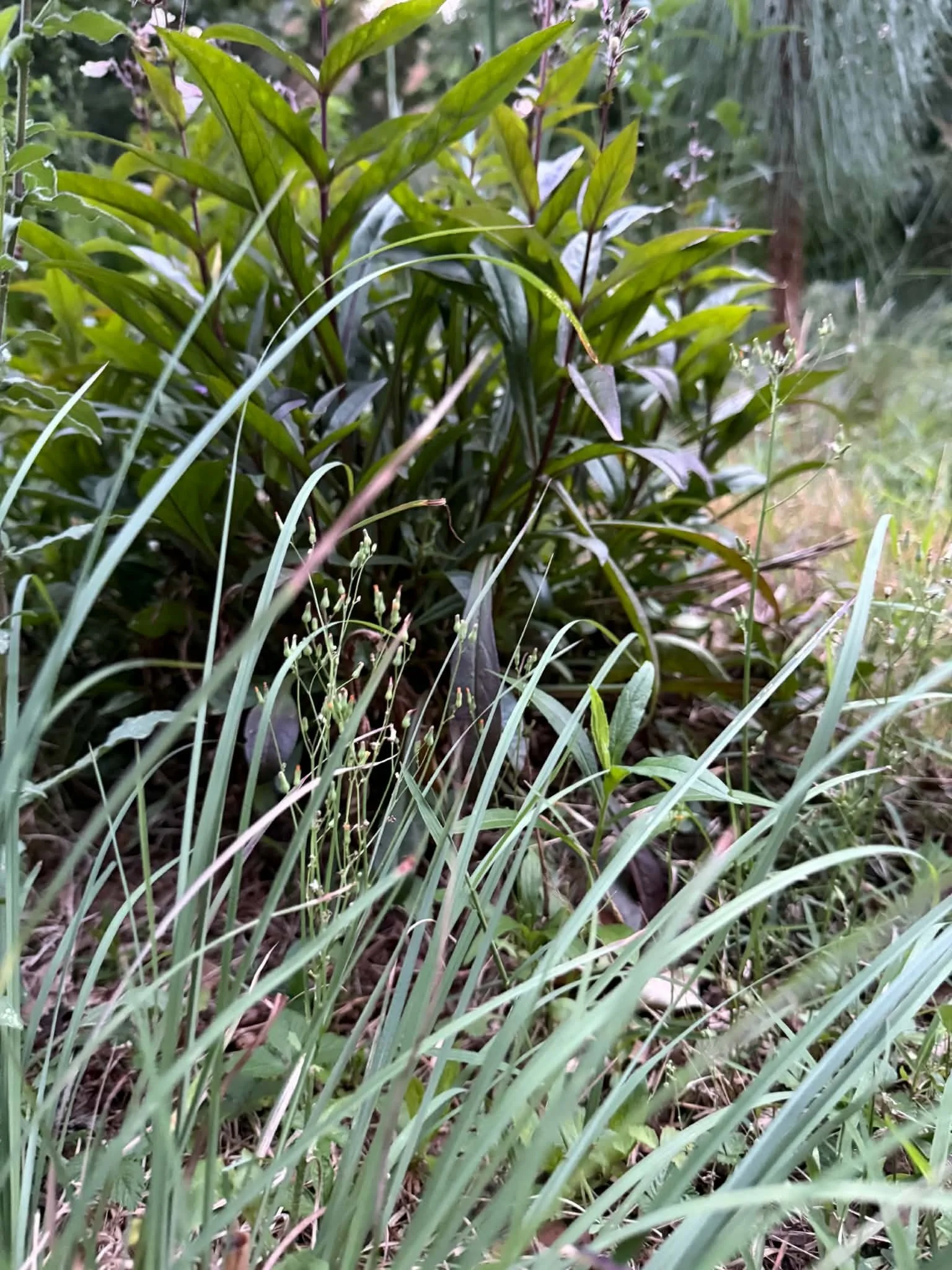
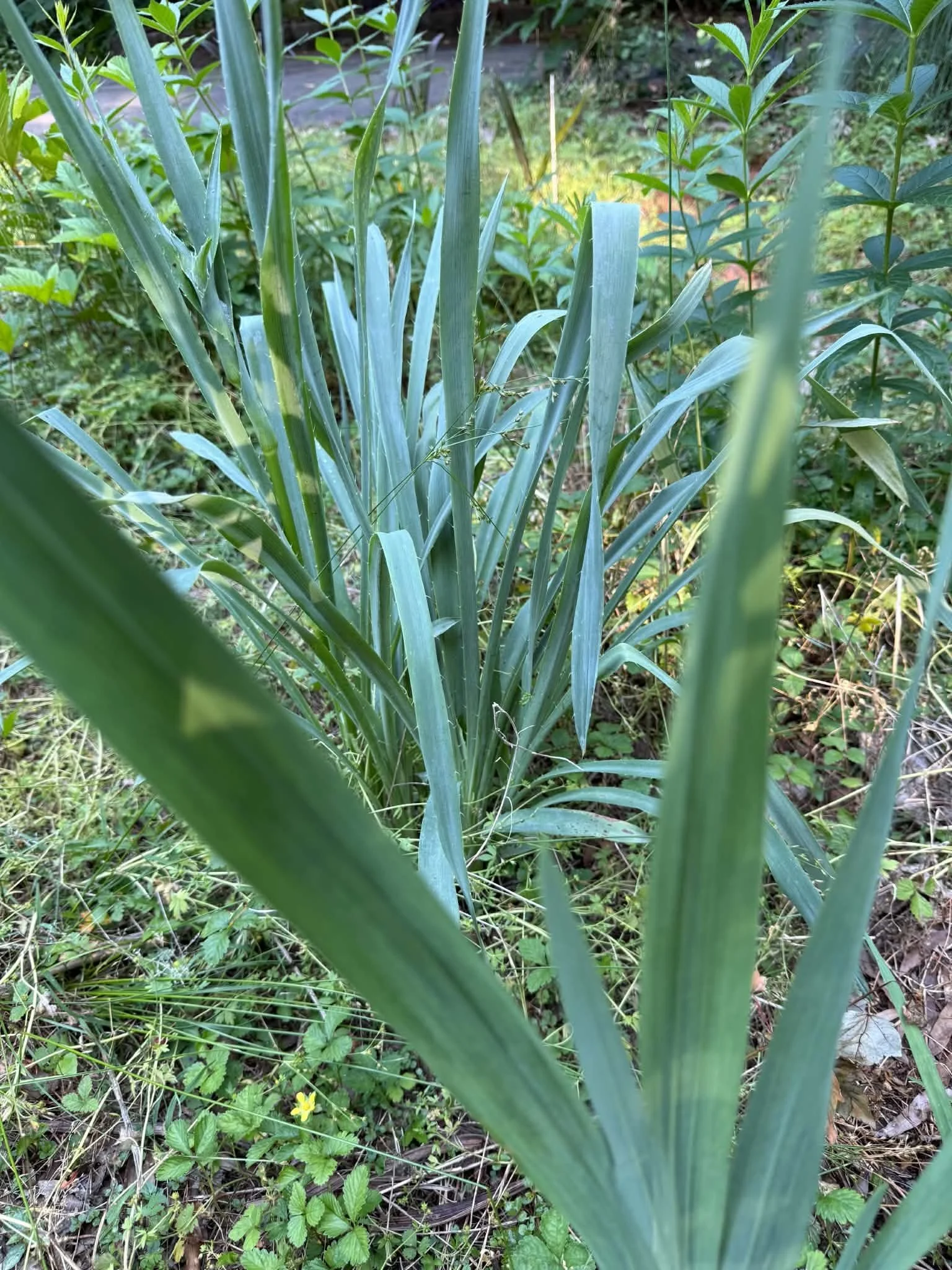
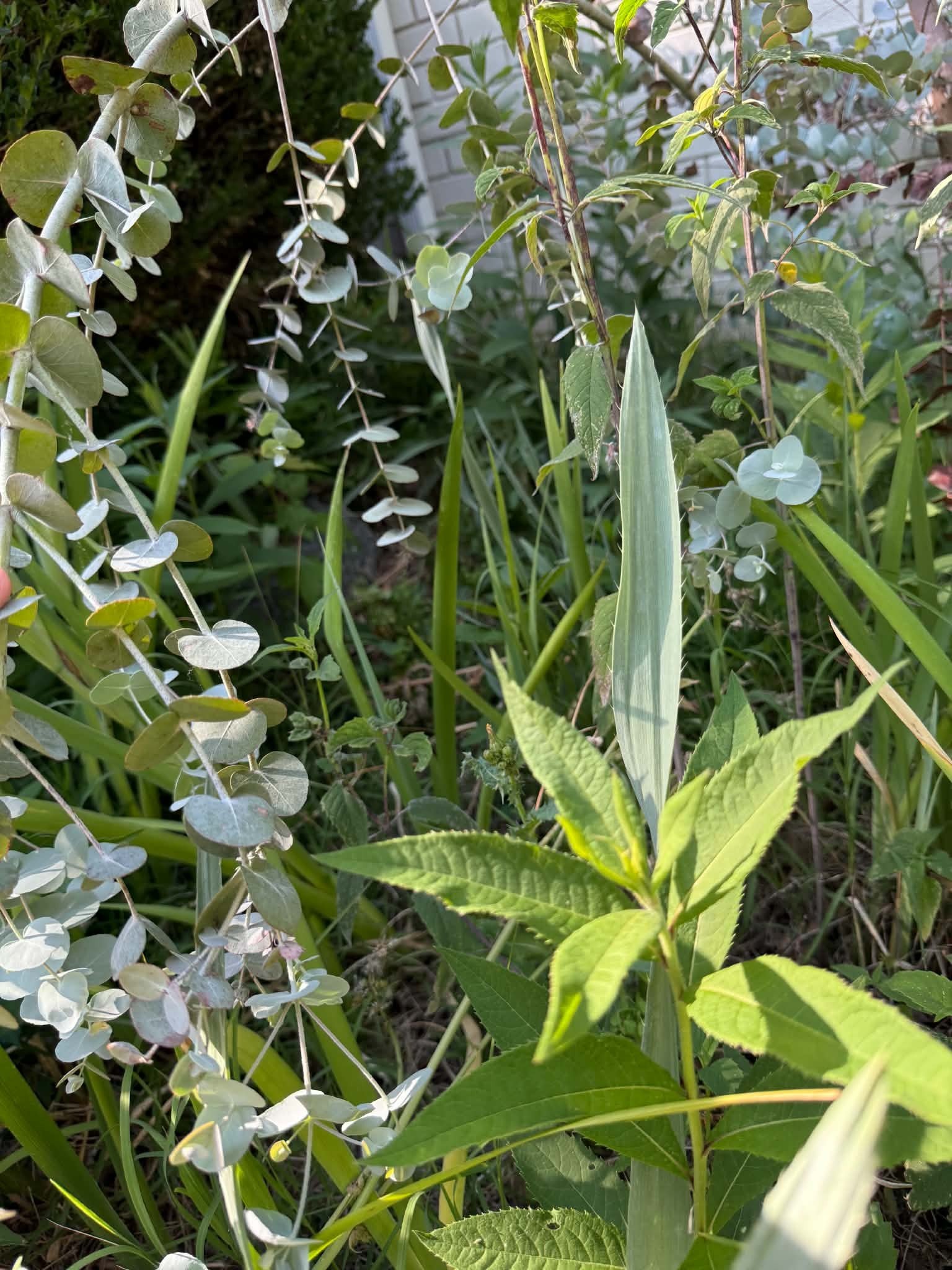
Flowers come and go with the season, but stems are ever present. They catch frost, deepen after rain, and glow in the evening light. They erupt vibrant and saturated and age with patina. A glaucous blue stem beside a lacquered purple cane can create as much tension and harmony as any bloom combination ever could. Smoky glaucous blues, bruised purples and reds, near-black stems — these are the colors that keep pulling my eye back into the garden long before the flowers arrive and far after they’ve faded.
I find myself pairing stems the way painters mix pigments: the dusky purple of ‘Baby Joe’ with a bit ofthe acidic Chedglow and deep dark of Eucomis. There now that’s my Monet. The the powdery blue of rattlesnake master beside the silver of eucalyptus. Positively pearlescent. These combinations become structure, rhythm, and add color to the framework through every layer of planting. Once you begin noticing stems, it becomes impossible to stop. You stop seeing flowers and leaves floating in space and begin seeing the garden as a tapestry of color from the ground up and extending in every direction.