I've always been interested in what makes a planting feel naturalistic. Not simply what plants are used, or whether a garden resembles a meadow, prairie or woodland, but what is actually happening beneath the surface of the design. Why do certain plant combinations feel so convincing? Why can one planting look spontaneous, complex and almost effortless, while another using many of the same plants be a total mess?
The more I look at the work of the world's leading naturalistic garden designers, the more I think the answer has less to do with any particular aesthetic and more to do with how they understand plants and the relationships between them.
Designers like Piet Oudolf, Dan Pearson, Nigel Dunnett, James Hitchmough, Sarah Price and Tom Stuart-Smith have developed distinctly different approaches to planting design. Their gardens don't necessarily look alike, and their methods can differ considerably. Some work with carefully composed perennial combinations, others with seeded plant communities, ecological mosaics or landscapes that transition between formal garden spaces and naturalized vegetation.
Yet there are some remarkable similarities in the way they approach their work.
What interests me is that these similarities aren't necessarily obvious when looking at photographs. They become more apparent when we start examining the underlying structure: how species are grouped, how dominant plants relate to supporting species, how planting communities connect, how space is occupied, and how the composition changes over time.
I think there are several fundamental principles that these designers share, even when their interpretations of those principles are quite different.
1. Designing plant communities rather than collections of plants
Perhaps the most fundamental commonality is that these designers aren't simply assembling collections of attractive plants. They're thinking about plant communities.
That distinction is important.
A collection of plants is essentially an inventory. A plant community is a system of relationships. Individual species have different growth habits, competitive abilities, seasonal characteristics, environmental requirements and effects on their neighbors. The success of the composition depends on how those characteristics interact.
Piet Oudolf has become particularly well known for his carefully composed perennial communities, in which plants are selected not just for their flowers but for their forms, textures, structure and behavior throughout the year.
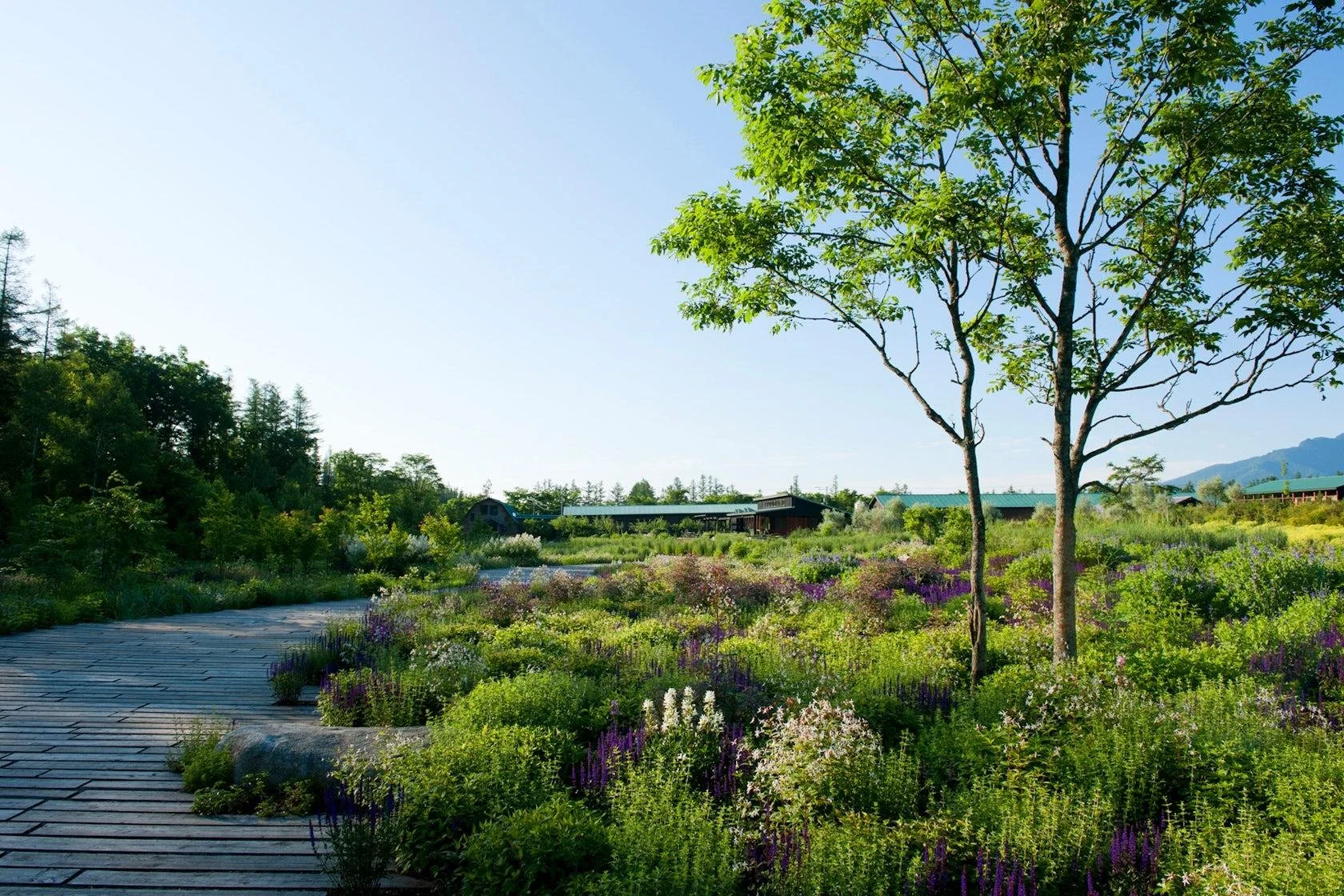
Dan Pearson approaches this from a somewhat different perspective, often drawing inspiration from naturally occurring plant associations and the character of particular landscapes. His work at Tokachi Millennium Forest in Japan demonstrates an interest in recreating the complexity and atmosphere of natural vegetation while maintaining considerable control over the planting combinations:
Nigel Dunnett and James Hitchmough take this concept further into ecological research. Their work investigates how designed plant communities can establish, compete, persist and provide ecological and aesthetic benefits.
The common principle is that the individual plant is only part of the equation. What matters is what happens when plants are brought together.
2. Establishing hierarchy without sacrificing diversity
One of the most interesting characteristics of naturalistic planting is that complexity doesn't necessarily come from giving every species equal importance.
In fact, some of the most successful compositions rely on a relatively small number of dominant plants to establish their identity, supported by a much larger collection of less prominent species.
This can happen in several ways. A dominant grass might establish the overall structure of a planting, while flowering perennials provide seasonal variation. A particular perennial might create a large visual mass, while smaller species appear intermittently throughout it.
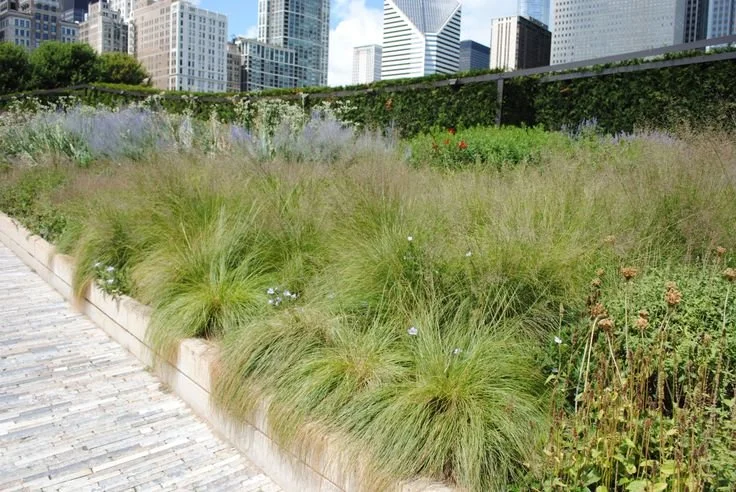
Oudolf's matrix planting is a particularly clear example. A relatively small number of dominant species, sometimes even a single grass, establish a continuous underlying structure through which other plants emerge:
Pearson also uses dominant plants and structural combinations, although his approach often emphasizes the relationships between individual colonies and the surrounding vegetation.
Hitchmough's experimental work provides an especially interesting ecological perspective. In one long-term designed plant-community experiment, 22 of the original 26 species were still present at the final census. However, just six species accounted for approximately 94% of the total sown-species biomass.
In other words, considerable species richness persisted alongside an extremely uneven distribution of biomass.
I think this illustrates an important principle: diversity and dominance are not opposites. A planting can retain considerable richness while a relatively small number of species establish most of its physical structure.
3. Repetition creates coherence, while variation prevents monotony
Another recurring characteristic is the use of repetition.
Naturalistic planting doesn't necessarily mean that every plant should be different or that every combination should be unique. In fact, repetition is one of the most important tools for creating coherence.
A particular species might recur in several areas of a garden. A certain flower form might be echoed by another species. Similar colours, textures or growth habits might appear at intervals throughout a composition.
The important distinction is that repetition doesn't have to mean uniformity.
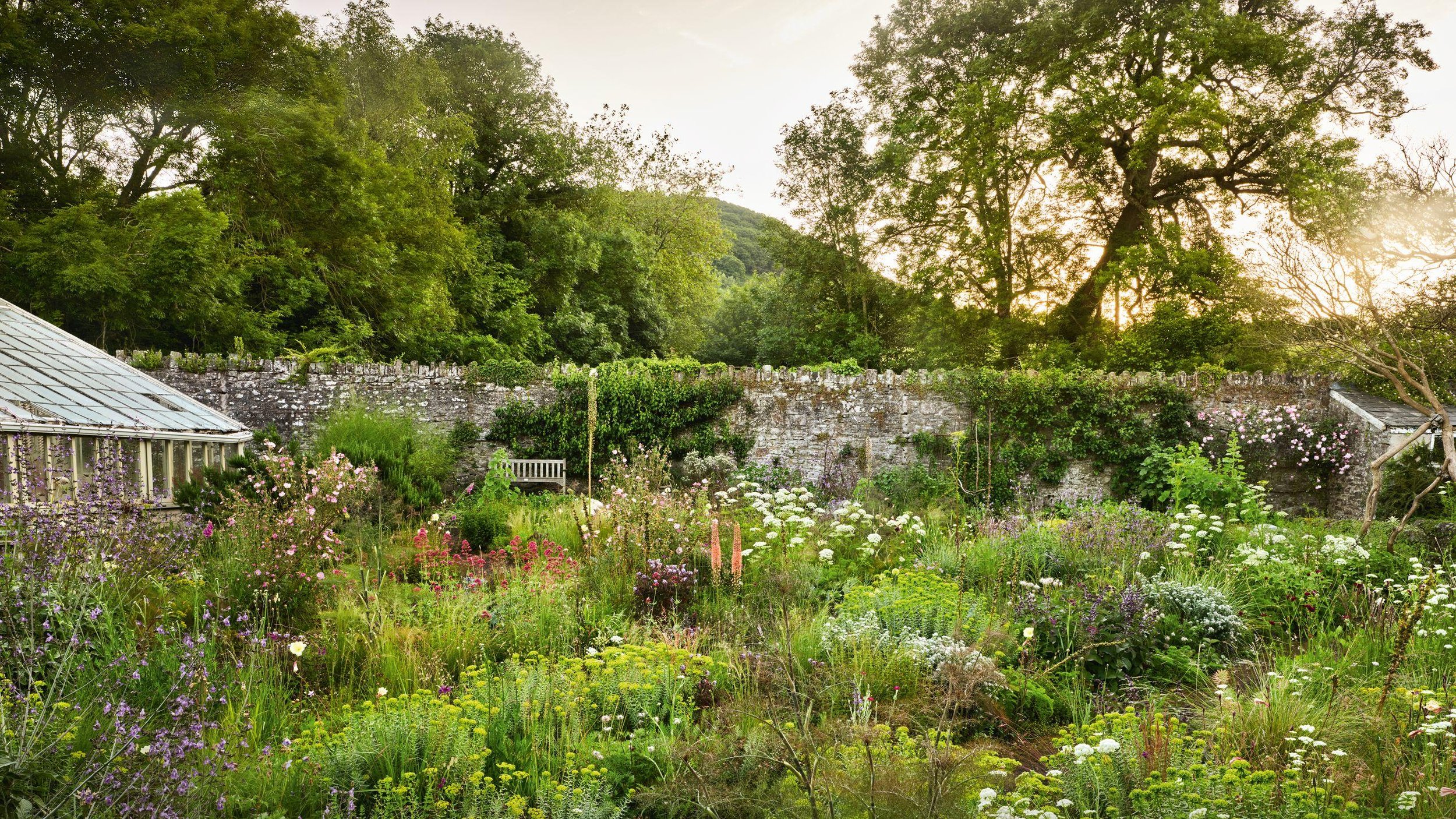
Sarah Price demonstrates this particularly well. In her Abergavenny garden, she uses similar flower shapes and colours across different species, creating visual connections without simply repeating the same plant:
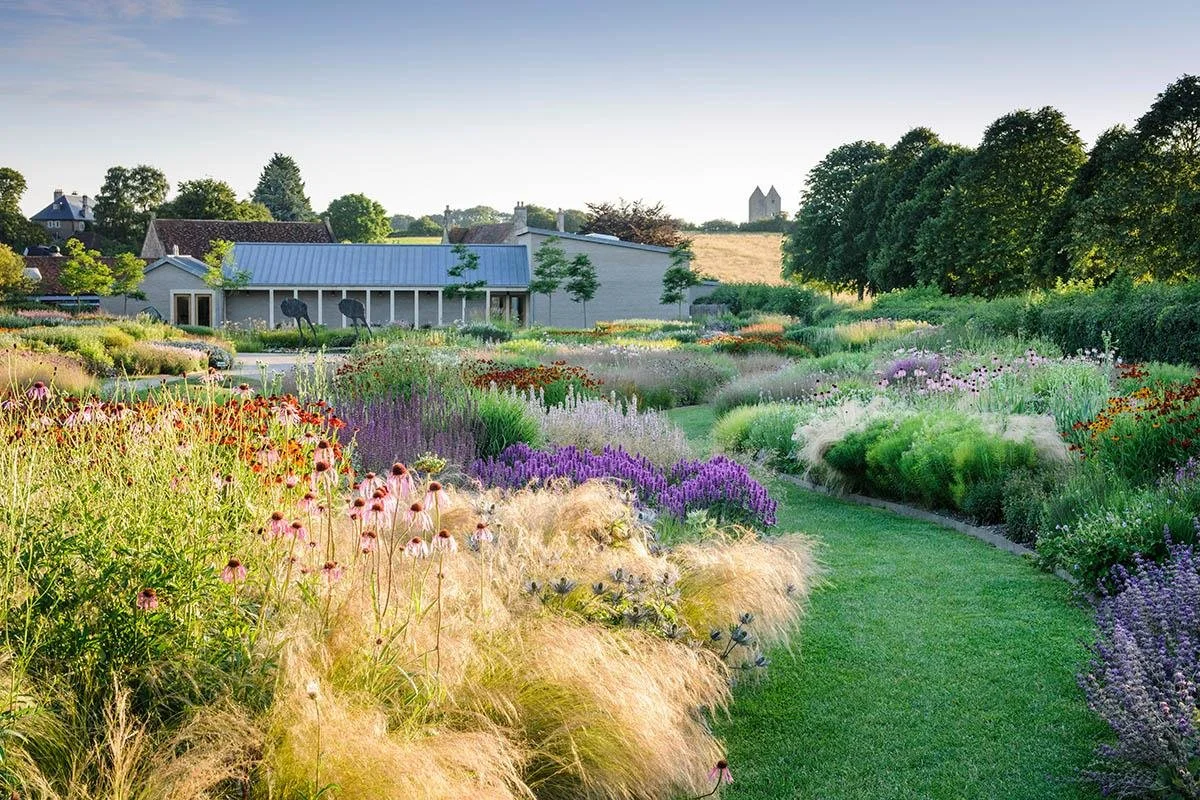
Piet Oudolf's planting demonstrates how repetition and dominant structural species can give a diverse planting visual coherence.
Pearson uses recurring species and colonies to connect separate planting areas, sometimes allowing individual plants to cross what might otherwise be distinct boundaries.
Stuart-Smith also employs repetition, although his work frequently uses structural elements and garden geometry to establish rhythm.
The result is a composition that feels connected without becoming monotonous.
I think this is one of the most important principles of naturalistic design: repetition provides unity, while variation provides complexity.
4. Balancing order and irregularity
This is where things become particularly interesting.
Naturalistic planting often gives the impression that plants have simply found their way into their positions through natural processes. But that appearance can be the result of an extraordinarily deliberate arrangement.
Pearson describes the use of what he calls mother colonies and satellite plants. Larger groups establish the main planting structure, while individual plants or smaller groups break away from them.
Oudolf uses a combination of blocks, matrix planting and scattered individuals. Some areas are highly structured, while others are more intermingled.
Dunnett's seeded plant communities can look considerably more spontaneous, but their species proportions, seed mixtures and environmental requirements are carefully considered.
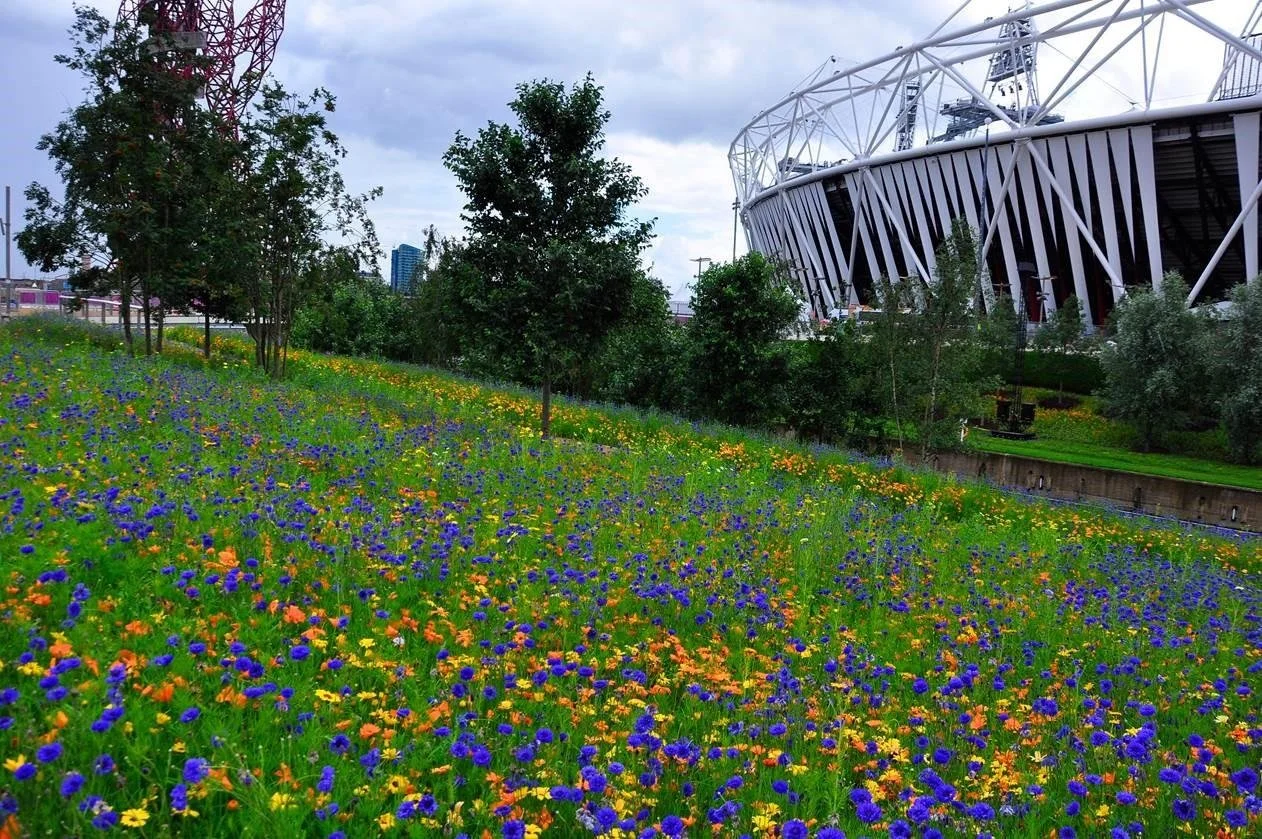
There is a distinction here between randomness and irregularity. They aren't the same thing.
A planting can be irregular without being random. It can have an underlying structure while allowing considerable variation in the distribution of individual plants.
This is perhaps one of the defining characteristics of naturalistic design: creating the appearance of spontaneity without sacrificing coherence.
5. Thinking in layers rather than simply planting at different heights
Another shared principle is the understanding that planting is a three-dimensional composition.
It's easy to think of planting design as a plan viewed from above, with individual plants represented by circles or symbols. But the actual planting exists vertically as well as horizontally.
Tall emergent plants, mid-level perennials, ground-layer species and matrix plants occupy different positions within the same space. Their foliage and canopies overlap, compete and change throughout the year.
Pearson often approaches planting through successive layers, considering the taller emergent plants first, followed by middle and lower layers.
Oudolf uses matrix species, primary plants and scattered individuals to create different structural roles.
Hitchmough has investigated this relationship experimentally through designed over-canopy and under-canopy communities. His research demonstrates that the lower layer can contribute ecological and seasonal functions that the upper layer cannot provide on its own:
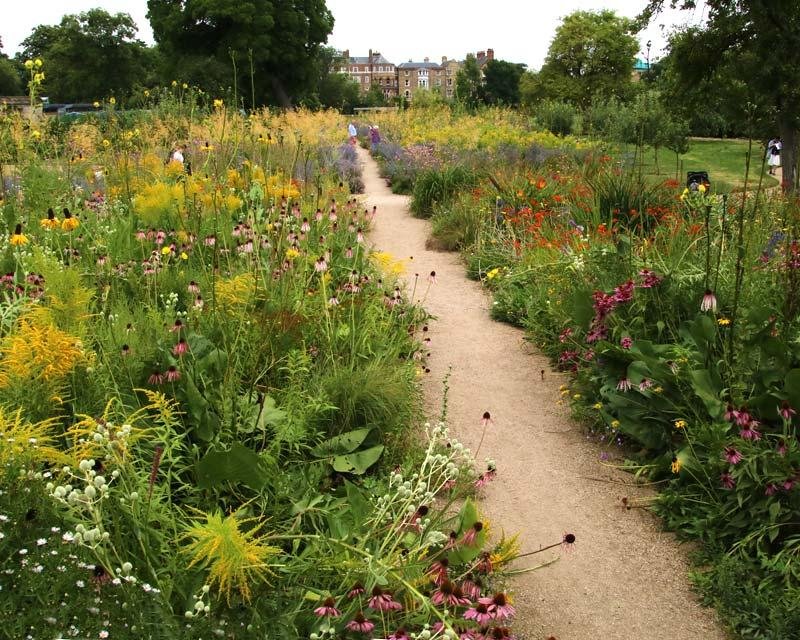
This is especially important when considering what happens outside the summer growing season. A lower, winter-green layer can occupy spaces left by plants that die back or lose their foliage.
The result is a composition that occupies space more completely and maintains interest across a much longer period.
6. Connecting planting areas rather than simply filling them
A naturalistic garden doesn't have to consist of one continuous, uniform planting community.
In fact, some of the most interesting gardens contain distinctly different planting areas that are connected through recurring species, forms, colours or ecological relationships.
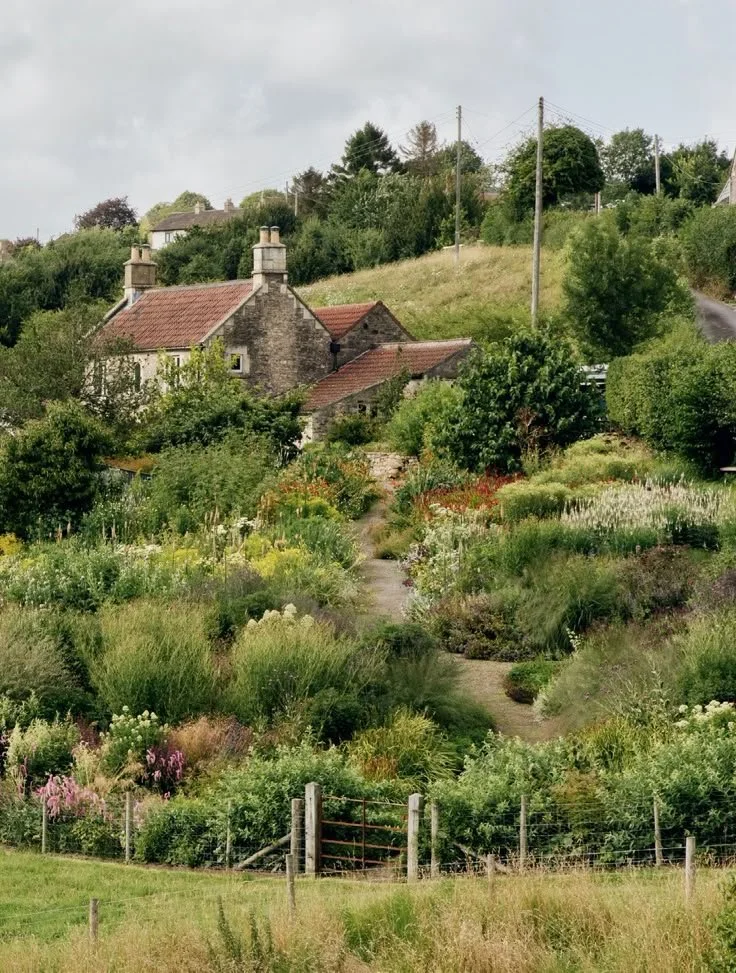
Pearson's Somerset garden is a particularly good example. He deliberately allows plants to cross between planting areas, using species that can function in more than one environmental condition to soften transitions between communities:
Oudolf uses matrix planting and repeated structural elements to connect larger compositions.
Stuart-Smith approaches this somewhat differently, often using paths, vistas, hedges and garden rooms to establish spatial relationships between planted areas.
These approaches demonstrate that continuity doesn't necessarily require uniformity.
A garden can contain several distinct plant communities and still feel like one coherent landscape.
7. Understanding the importance of negative space
One thing that I think sometimes gets overlooked in discussions of naturalistic planting is the importance of the spaces between plants.
Paths, lawns, clearings, openings and unplanted areas are not simply leftover space. They are part of the composition.
Tom Stuart-Smith's Barn Garden is particularly interesting in this respect. The garden contains enclosed planted spaces, open green rooms, formal vistas and transitions into meadow and woodland:
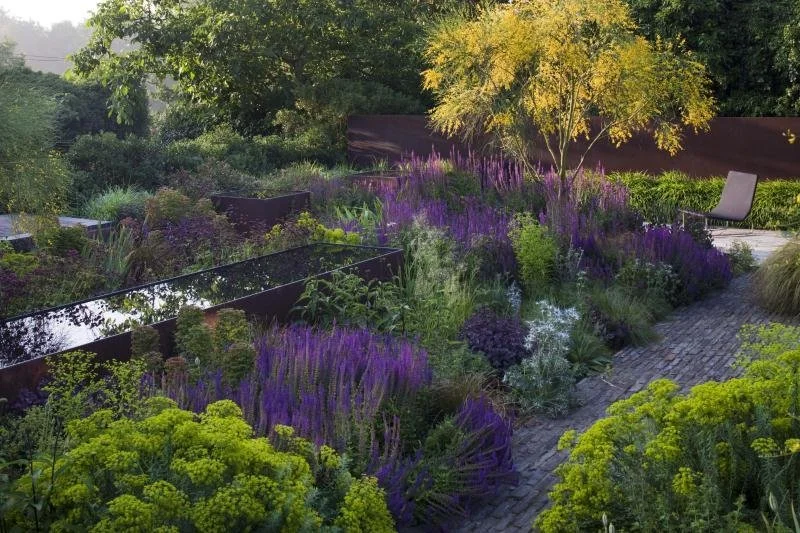
The relationship between these areas is just as important as the planting itself.
Oudolf also incorporates paths and clearings into larger naturalistic compositions, allowing visitors to move through the vegetation rather than simply observe it from the outside.
The density of a planting is only one part of its character. The distribution of open space, the size of gaps and the relationship between planted and unplanted areas all contribute to the overall experience.
Sometimes the most important design decision is knowing where not to plant.
8. Responding to environmental conditions
Perhaps the most significant distinction between naturalistic design and purely ornamental planting is the degree to which environmental conditions influence the composition.
Soil moisture, fertility, light, exposure, substrate and drainage all determine which plants can establish and how they will perform.
Sarah Price's work is particularly interesting here. Her garden explores the relationship between mineral substrates and plant communities, using different materials and growing conditions to create a mosaic of habitats. Many garden designers have followed suit.
Dunnett and Hitchmough approach this through ecological research and the development of plant communities suited to particular climatic and environmental conditions.
Pearson often draws inspiration from the ecological character of specific landscapes, considering the relationships between plants and the conditions in which they naturally occur.
The important point is that environmental conditions aren't simply constraints that the designer has to work around. They can become part of the design itself. We’re seeing this a lot more with Mediterranean and sand based gardens as we head into a warming climate. We can grow a lot of species in areas they typically wouldn’t simply by changing what they grow in or on. I’ve written about this before with what we find in industrial waste lots.
A change in moisture, soil depth or exposure can provide the basis for a transition between different planting communities.
9. Designing for succession rather than just installation
A planting plan represents a particular moment in time, but a garden is a living system.
Plants establish at different rates. I’ve tried using Prairie Dropseed half a dozen times to no avail for example. It drives me crazy because it’s apparently such a good matrix grass but here in the southeast it needs great drainage and it slow to establish. Some spread aggressively, others remain relatively restrained. Some species become more dominant over time, while others gradually decline.
This means that the planting we see several years after installation may look quite different from the original design.
Hitchmough's experimental work provides an excellent example of this. His research demonstrates how the relative abundance of species changes as plant communities establish and compete.
Pearson also acknowledges this dynamic process in his work at Tokachi Millennium Forest, where planting combinations were reviewed and adjusted as communities developed. Since I heard the sad news of it’s closing it’ll be fascinating if there’s any follow up to see what eventually becomes of it.
Dunnett's seeded meadows similarly depend on establishment, competition and seasonal succession.
I think this is an important distinction between designing a static ornamental composition and designing a living plant community. The designer isn't simply deciding what goes where. They're establishing the initial conditions for a system that will continue to develop.
10. Designing for all seasons and for the experience of being in the garden
Finally, these designers understand that a garden cannot be judged by its appearance at one particular moment.
Flowers are only one part of the composition. Foliage, stems, seed heads, silhouettes, textures and the changing structure of vegetation all contribute to the experience throughout the year.
Oudolf has been particularly influential in changing how we think about the value of plants after flowering. The dried stems and seed heads of many perennials become an essential part of the autumn and winter composition.
Dunnett often approaches seasonal change through deliberately planned flowering sequences and colour transitions.
Pearson considers the atmosphere of a landscape across seasons, while Stuart-Smith integrates planting with the experience of moving through spaces, looking across vistas and discovering different garden environments.
The best naturalistic gardens aren't simply attractive collections of plants. They are places that change, develop and offer different experiences throughout the year.
So what actually makes a planting naturalistic?
After looking at the work of these designers, I don't think naturalistic design can be reduced to a particular plant palette, planting density, geometric arrangement or aesthetic style.
There are many ways to approach it, and the differences between these designers are worth celebrating rather than trying to eliminate.
What they share is a fundamental understanding that plants exist in relationships: with one another, with their environment, with space and with time.
They understand that complexity doesn't mean a lack of order, that repetition doesn't have to mean monotony, and that a planting community is much more than the sum of its individual plants.
Some use matrix planting, others interlocking colonies, seeded communities, ecological mosaics or architectural garden spaces. Their methods differ, but they repeatedly address the same fundamental questions about hierarchy, diversity, spatial organization, ecological relationships and succession.
I think that is ultimately what makes their work so compelling.
Their greatest commonality is not that they make gardens look like nature. It is that they understand how nature organizes complexity—and know how to translate that understanding into design.